
Embark on a journey through the world of EFT for depression, where emotional freedom meets the battle against the blues in a unique and powerful way.
Discover the innovative techniques, real-life stories, and research insights that shed light on this promising approach to managing depression.
Introduction to EFT for Depression
EFT, or Emotional Freedom Technique, is a form of alternative therapy that involves tapping on specific meridian points on the body to address emotional and psychological issues. It can be used as a tool for managing depression by helping individuals release negative emotions, reduce stress, and promote a sense of well-being.
Principles of EFT and How it Differs from Traditional Therapeutic Approaches
EFT is based on the idea that imbalances in the body’s energy system can contribute to emotional distress and physical symptoms. By tapping on meridian points while focusing on specific issues, individuals can help restore balance to their energy system and alleviate negative emotions. This approach differs from traditional therapeutic approaches by combining elements of cognitive therapy, exposure therapy, and somatic techniques to address emotional issues.
Examples of EFT in Treating Individuals with Depression
- EFT has been used to help individuals identify and address underlying emotional issues that contribute to their depression.
- Studies have shown that EFT can reduce symptoms of depression, anxiety, and stress in individuals who practice it regularly.
- Therapists have integrated EFT into their treatment plans for clients with depression, often seeing improvements in mood and overall well-being.
Understanding Depression
Depression is a common mental health disorder characterized by persistent feelings of sadness, hopelessness, and loss of interest in activities. It can affect how a person thinks, feels, and behaves, leading to a variety of emotional and physical problems.
Common Symptoms of Depression
- Feelings of sadness, emptiness, or hopelessness
- Lack of interest in activities once enjoyed
- Changes in appetite and weight
- Difficulty concentrating and making decisions
- Fatigue or loss of energy
- Thoughts of death or suicide
Impact of Depression on Mental Health and Daily Functioning
Depression can have a profound impact on an individual’s mental health and daily functioning. It can lead to social isolation, strained relationships, and difficulties in work or school performance. Additionally, depression can increase the risk of developing other mental health disorders, such as anxiety or substance abuse.
Different Types of Depression
- Major Depressive Disorder: Characterized by severe symptoms that interfere with daily life.
- Persistent Depressive Disorder: Involves long-term, chronic symptoms of depression.
- Bipolar Disorder: Involves periods of depression alternating with episodes of mania.
- Seasonal Affective Disorder: Occurs during specific seasons, typically winter, due to lack of sunlight.
Benefits of EFT for Depression
EFT, or Emotional Freedom Techniques, has shown promising results as a complementary treatment for depression. This alternative therapy focuses on tapping acupressure points on the body while addressing negative emotions and thoughts.
Emotional Regulation
- EFT can help individuals regulate their emotions by disrupting the negative thought patterns associated with depression.
- Through tapping on specific points, individuals can release pent-up emotions and create a sense of calmness and relaxation.
Stress Reduction
- By practicing EFT, individuals can lower their stress levels, which are often heightened in individuals with depression.
- The tapping process can help reduce cortisol levels in the body, leading to a decrease in overall stress and anxiety.
Improved Mood
- Many individuals have reported an improvement in their mood after incorporating EFT into their daily routine.
- EFT can help shift negative emotions towards more positive and empowering feelings, leading to a brighter outlook on life.
Techniques and Practices
EFT offers several techniques and practices that can be beneficial for individuals struggling with depression. By incorporating specific tapping points and affirmations, EFT can help alleviate symptoms and improve emotional well-being.
Step-by-Step Guide for Performing EFT for Depression
- Start by identifying a specific issue or emotion related to your depression that you want to address.
- Rate the intensity of this emotion on a scale from 0 to 10 to track progress.
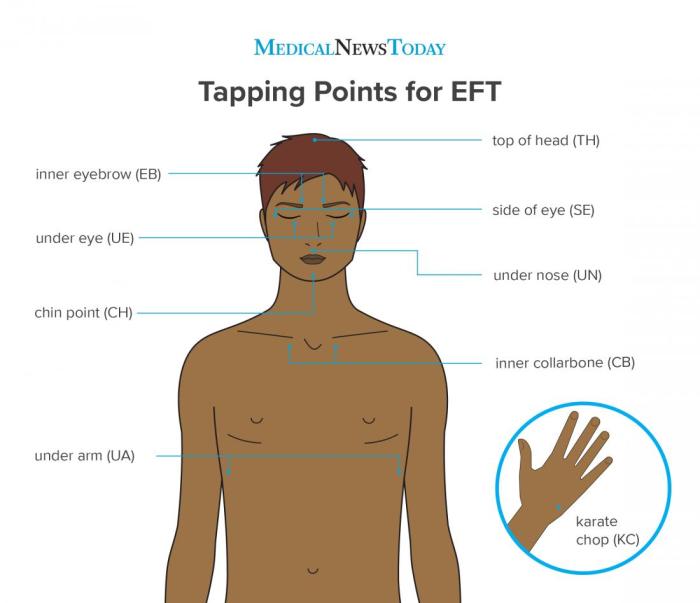
- Tap on the following points while repeating a positive affirmation or statement related to your issue:
- Top of the head
- Beginning of the eyebrow
- Side of the eye
- Under the eye
- Under the nose
- Chin
- Collarbone
- Under the arm
- Top of the head
- Continue tapping and repeating the affirmation until you feel a shift in your emotional state or the intensity of the emotion decreases.
- Reassess the intensity of the emotion and repeat the process if necessary.
Tips for Incorporating EFT into Daily Self-Care Routine
- Set aside dedicated time each day to practice EFT, whether it’s in the morning, evening, or whenever you feel the need.
- Create a comfortable and quiet space for your EFT practice to minimize distractions and fully focus on your emotions.
- Keep a journal to track your progress, including the emotions you addressed, the affirmations used, and any shifts in intensity.
- Experiment with different tapping points and affirmations to find what works best for you and your specific issues.
- Be patient and consistent with your EFT practice, as it may take time to see significant improvements in your emotional well-being.
Research and Evidence
Research studies and clinical trials have been conducted to investigate the effectiveness of Emotional Freedom Techniques (EFT) for depression. These studies have shown promising results in using EFT as a complementary therapy for managing depressive symptoms.
EFT vs. Conventional Treatments
- One study published in the Journal of Nervous and Mental Disease compared the effects of EFT with Cognitive Behavioral Therapy (CBT) on symptoms of depression. The results showed that both interventions were effective, but EFT showed quicker and more sustained improvement in mood compared to CBT.
- Another meta-analysis of EFT studies found that EFT was associated with significant improvements in depression, anxiety, and PTSD symptoms. The results indicated that EFT could be a valuable treatment option for individuals experiencing these mental health issues.
Limitations and Future Studies
- Some limitations of existing research on EFT for depression include small sample sizes, lack of long-term follow-up, and variability in EFT techniques used across studies. Future studies could address these limitations by conducting larger randomized controlled trials with longer follow-up periods.
- Additionally, more research is needed to explore the mechanisms of action underlying EFT and its effects on brain function and neurobiology in individuals with depression. Understanding these mechanisms can help optimize EFT interventions and improve outcomes for individuals with depression.
Self-Care and Support
Self-care practices play a crucial role in managing depression alongside Emotional Freedom Techniques (EFT). It involves taking deliberate actions to prioritize mental and emotional well-being, promoting overall health and resilience. Seeking additional support and professional help when needed are also important steps in navigating the challenges of depression.
Self-Care Practices for Managing Depression
- Establish a routine: Creating a daily schedule can provide structure and stability, helping to reduce feelings of overwhelm.
- Physical activity: Regular exercise releases endorphins, improving mood and reducing symptoms of depression.
- Healthy eating: Consuming a balanced diet rich in nutrients can support brain function and emotional well-being.
- Quality sleep: Prioritize sleep hygiene to ensure restful and rejuvenating sleep, essential for mental health.
- Mindfulness and relaxation techniques: Practices such as meditation, deep breathing, and yoga can help manage stress and promote inner peace.
Seeking Additional Support
- Therapy: Consider psychotherapy or counseling to explore underlying issues, learn coping strategies, and receive emotional support.
- Support groups: Joining a support group for individuals with depression can provide a sense of community and understanding.
- Hotlines and helplines: Utilize crisis hotlines or mental health helplines for immediate support during difficult times.
- Online resources: Explore reputable websites, forums, and apps dedicated to mental health for information and guidance.
Importance of Professional Help
- Consulting a mental health professional: It is crucial to seek help from a therapist, psychiatrist, or psychologist for accurate diagnosis and personalized treatment.
- Medication management: For severe depression symptoms, medication prescribed by a healthcare provider may be necessary to rebalance brain chemistry.
- Crisis intervention: In cases of acute distress or suicidal ideation, immediate intervention by trained professionals is essential for safety and stabilization.
Last Recap
As we reach the end of our exploration, remember that hope and healing are always within reach with EFT for depression, offering a path to brighter days and emotional well-being.
Key Questions Answered
How does EFT differ from traditional therapy?
EFT focuses on tapping specific points on the body to address emotional distress, unlike traditional talk therapy.
Can EFT be used as a standalone treatment for depression?
EFT is often used as a complementary approach alongside other treatments for depression, offering additional support.
Are there any age restrictions for using EFT?
EFT can be safely used by individuals of all ages, including children and older adults.


